
20 Jul 2026 By AIYANA LEA
Tambu Phuket: This has to be one of the best Indian Restaurant in Asia
Reviewed by Aiyana Lea
Tambu Phuket:
Where tradition meets curiosity, Tambu Phuket’s progressive Indian cuisine in the Avista Hideaway Phuket delivers far more than the flavours of the historic Silk Road; it serves the stories, history and soul of a civilisation. Perched high above Patong in a Mughal-inspired rooftop tented palace, every course invites diners on a journey across the Indian subcontinent, where centuries-old recipes are kept with traditional flavours and modern techniques. Rather than confining itself to a single region, Tambu celebrates India in its entirety, guiding guests from the deeply spiced, open-fire traditions of the North to the coconut-laced, seafood-rich cuisine of the South, revealing the extraordinary diversity that defines one of the world’s oldest culinary cultures.
That ambition has earned international recognition. Featured in the Michelin Guide, ranked among Phuket’s Top 25 Restaurants and recognised as Asia’s Best New Restaurant at the World Culinary Awards, Tambu has quickly established itself as one of Thailand’s premier dining destinations. Under the direction of Iron Chef Thailand winner Chef Saurabh Sachdeva, the restaurant’s tasting menu is more than a succession of beautifully plated dishes; it is a carefully choreographed story, where smoke, spice, texture and memory converge to tell the story of India.
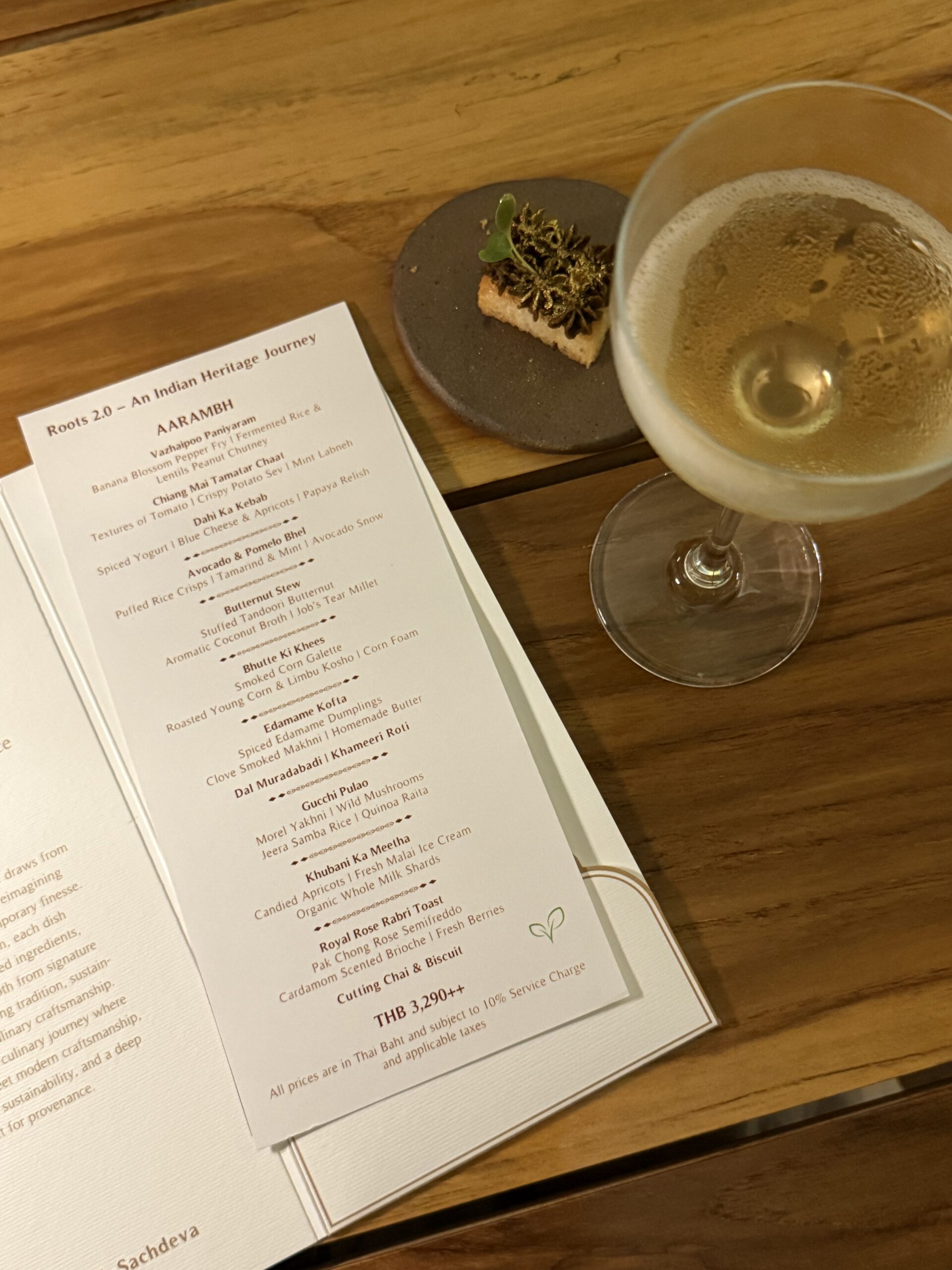
The menu unfolds with light flavours building upon the last. Traditional flavours that highlight the freshness of the cuisine, and builds new thought onto the cuisine as a whole, lively and refreshing, layered with tang of tamarind, herbs, crisp textures. Notably, the Chiang Mai Tamatar Chaat with its crisp base and subtle tartness of the locally harvested tomatoes showcased Tambu’s playful character as opposed to adhering to strict traditional recipes, it introduces produce with remarkable finesse.
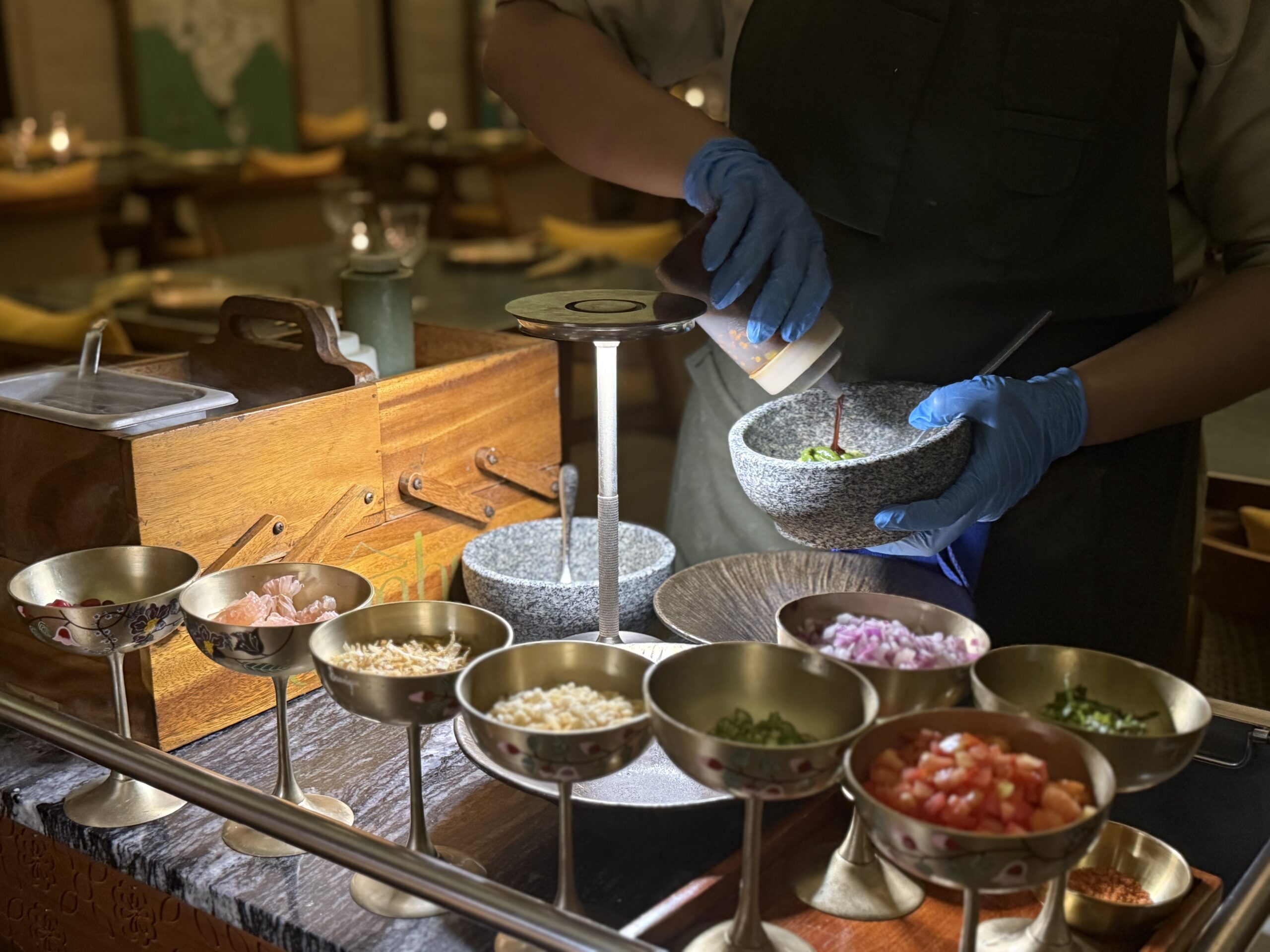
And this is carried through the table side creation of the Avocado and Pomelo Bhel, where snow was created through methods of freezing live at the table. The dish: light and replenishing, acting as a great theatrical transition to coat the stomach for the richness of the later courses.
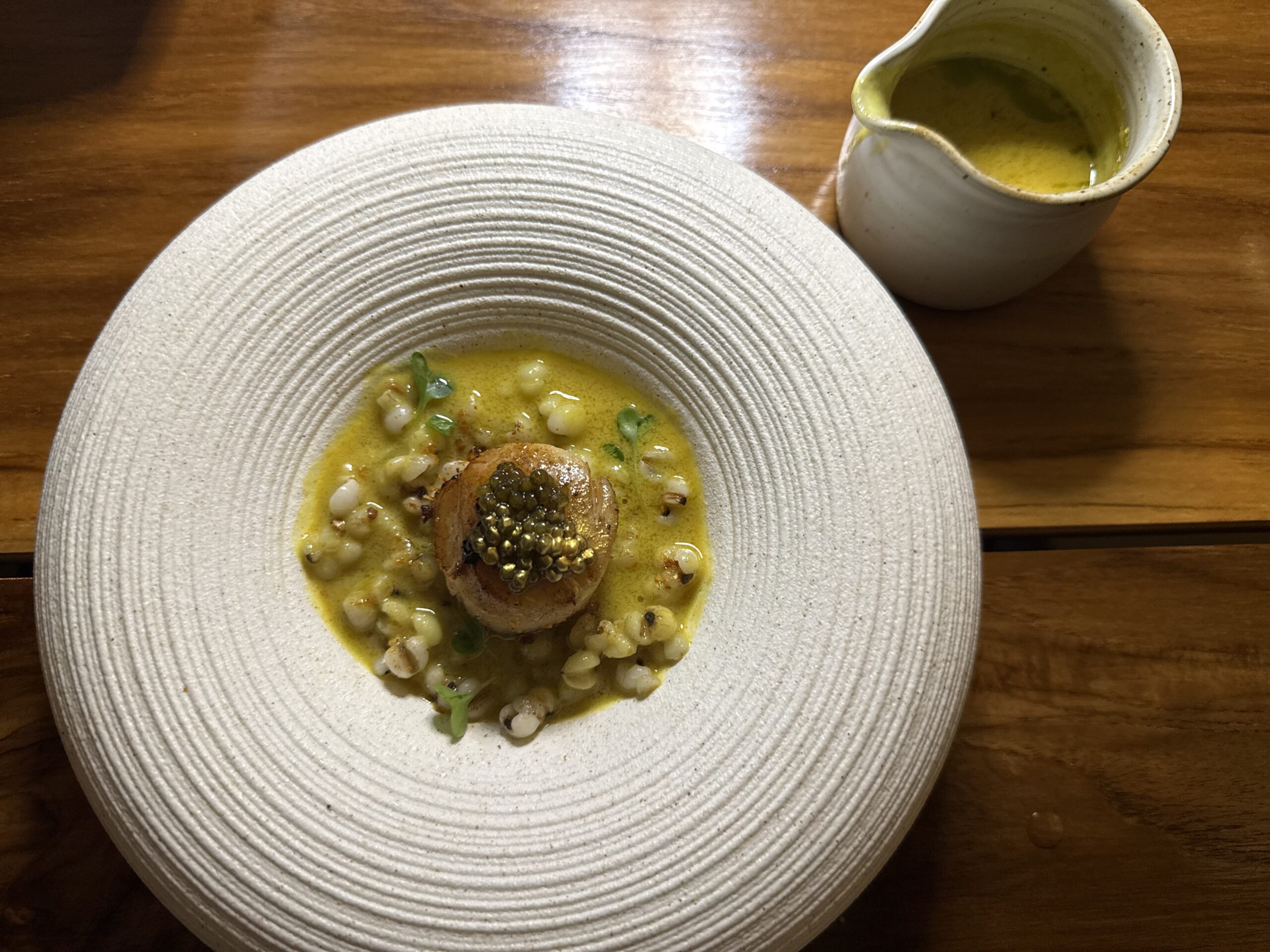
The symphony hit its peak personally at three notable dishes, the scallop moilee, the charred hokkaido scallop paired with the moilee cut by the freshness of the caviar; the lamb chop barrah charred to perfection highlighting the techniques of the North and the Gucchi Pulao, cooked within a claypot, intense flavours and richness of the morel and wild mushrooms were painted throughout the every grain of rice. Wholly, aromatic spices such as cardamom, cumin, cloves, coriander and Kashmiri chilli are used with remarkable restraint, creating warmth and depth rather than fiery heat. Coconut-based sauces from southern India provide a silky richness to seafood, while northern classics showcase robust gravies, slow-cooked lentils and beautifully caramelised meats, revealing the diversity of India’s regional cuisines within a single dining experience.
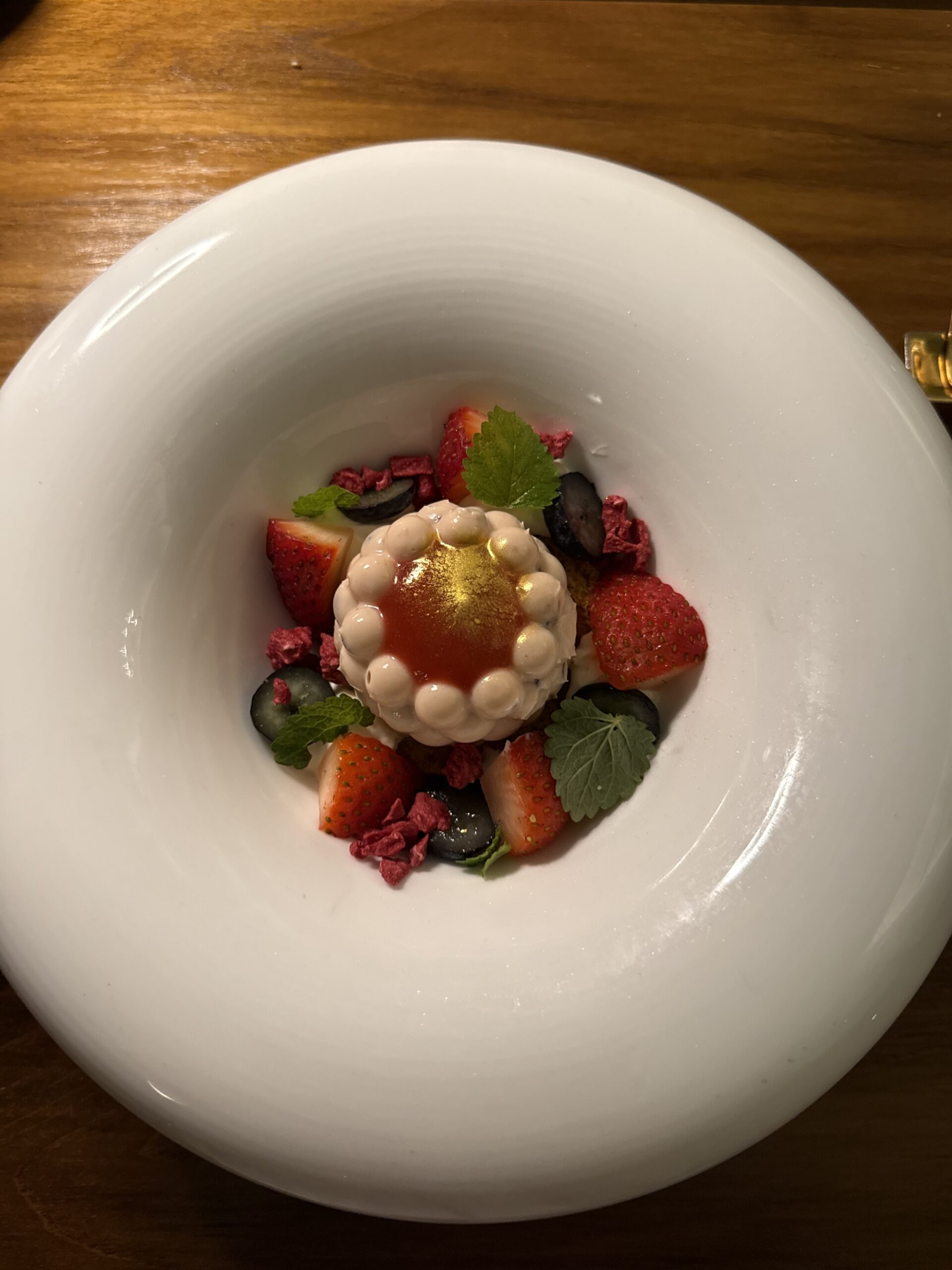
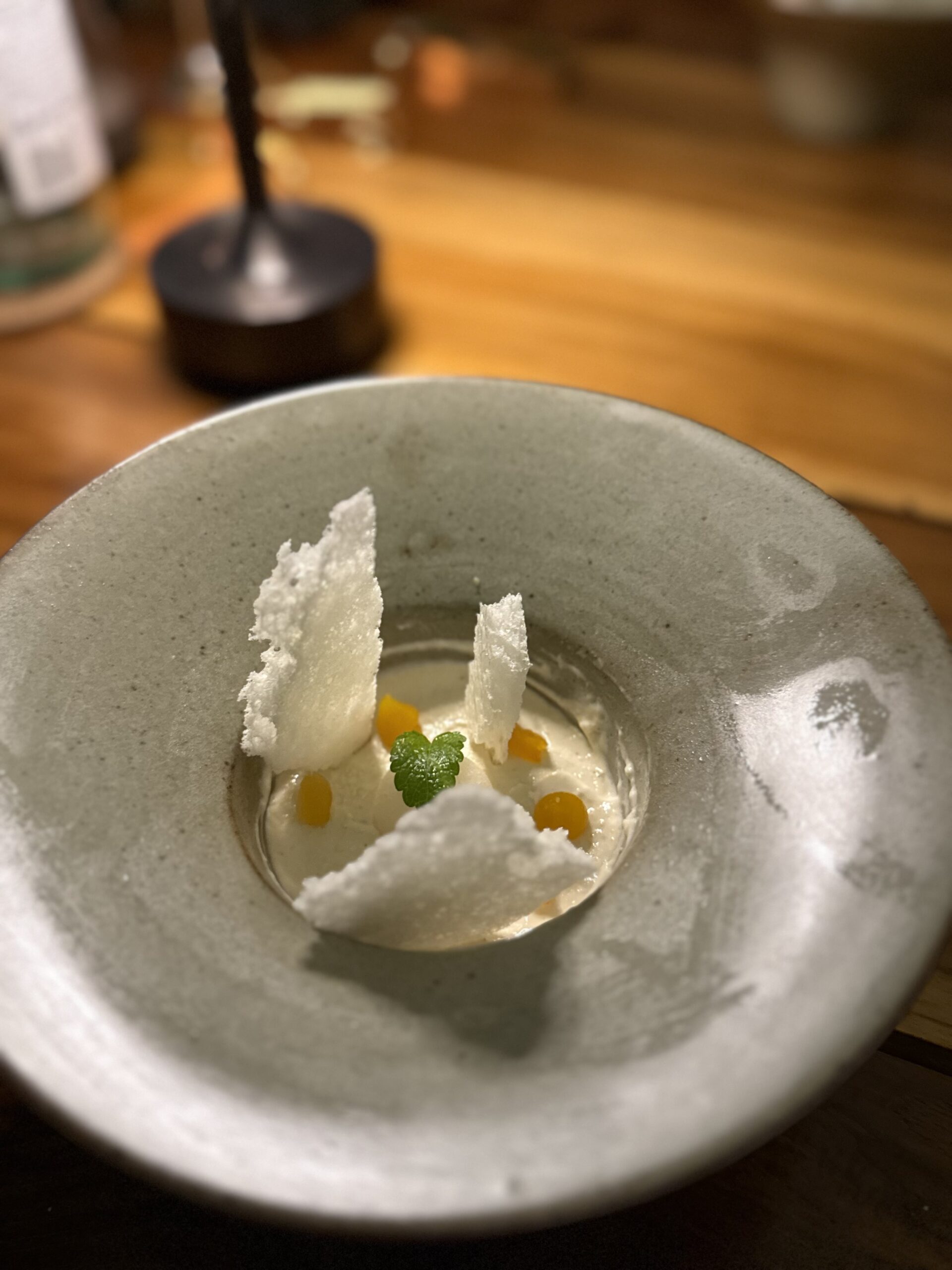
The final courses provide a gentle contrast, shifting from savoury spice to elegant sweetness. Fragrant rose, saffron, cardamom and candied apricot combine with creamy malai and delicate dairy elements to create desserts that are rich yet never cloying, truly a matrimonial mix of flavours from which it is intended to be for. Rather than ending with excessive sweetness, the tasting menu finishes with balance and refinement, leaving lingering notes of floral perfume, warm spice and subtle smokiness that echo the journey from the very first course.