
25 May 2026 By DREW KIM
L’ÉCOLE, School of Jewelry Arts Presents Precious Coral, from Curiosity to Treasures Exhibition
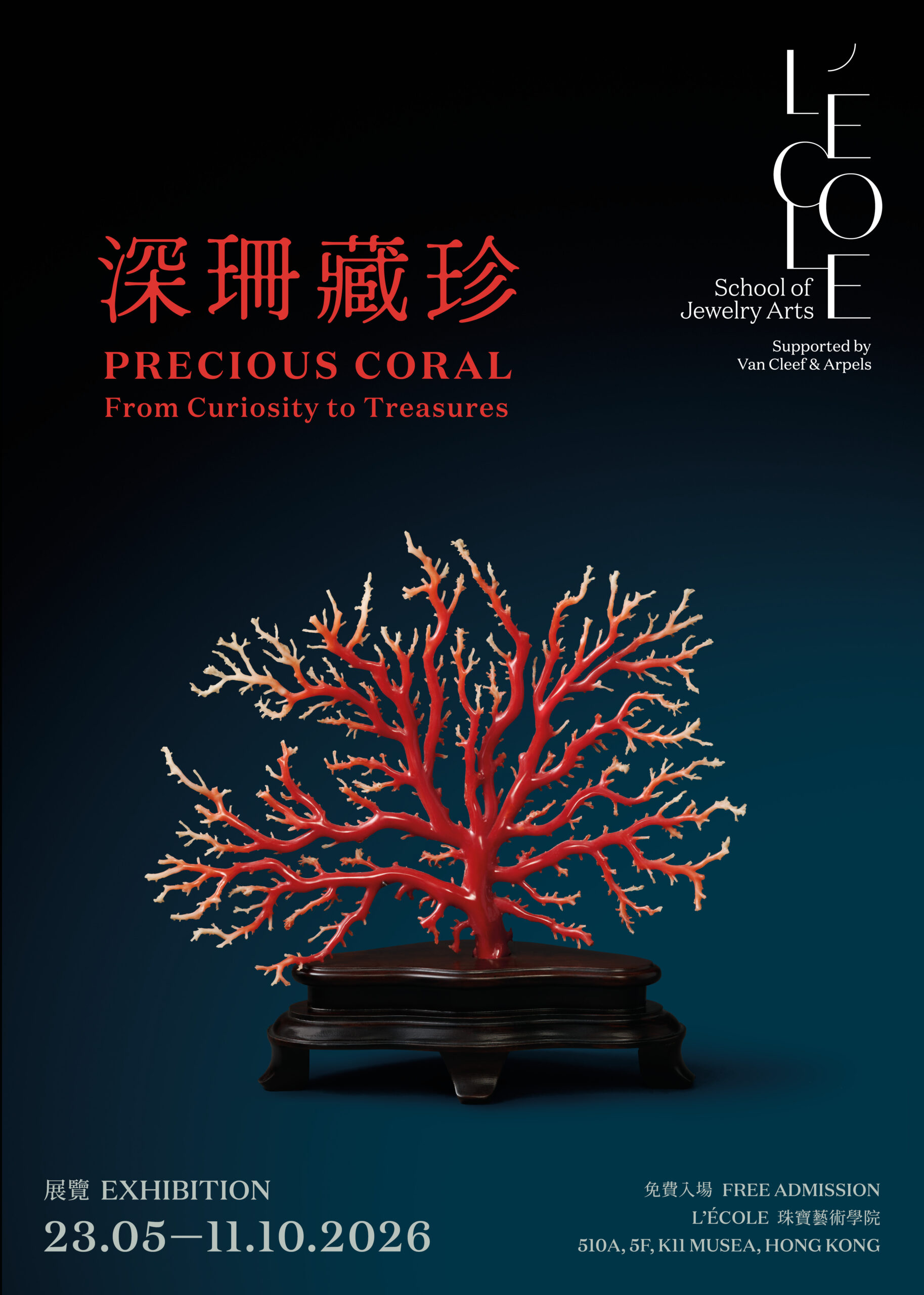
This year in Hong Kong, L’ÉCOLE, School of Jewelry Arts, is proud to present Precious Coral, from Curiosity to Treasures, an exhibition dedicated to one of the most fascinating precious materials in jewelry history.
From May 23rd to October 11th, 2026, the exhibition brings together approximately 120 jewelry creations and exceptional specimens on loan from distinguished collections and institutions. The most significant presentation on campus to date, it proposes examining precious coral through three lenses: Biology and Gemology, Craftsmanship, and History.
Enigma of Coral
Precious coral has been worn, traded, carved, polished, revered, and mythologized for millennia; it was also often mistaken for a stone or a plant. The exhibition opens with addressing that misconception: coral is an animal.
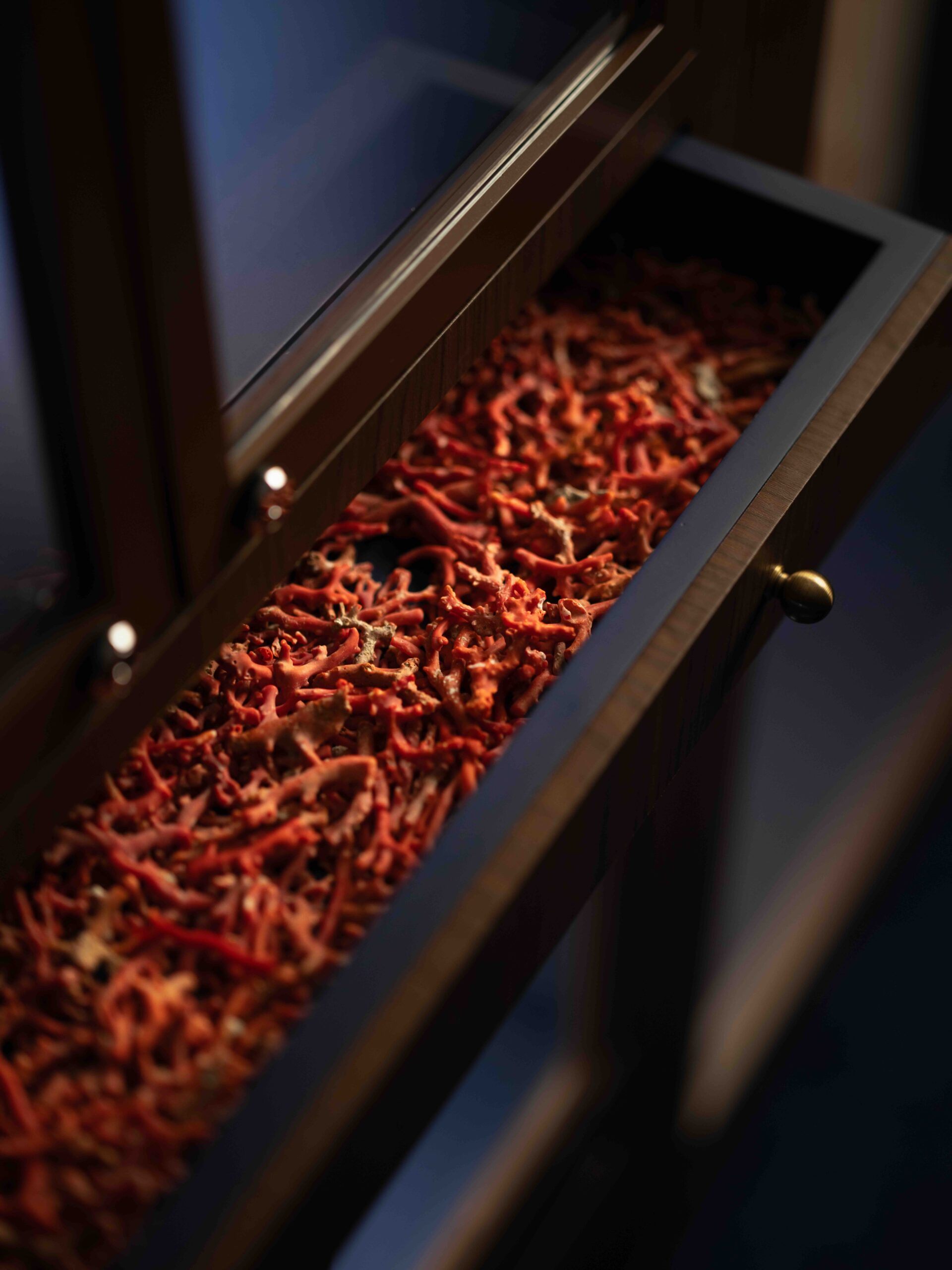
Precious coral lives in deep, dark waters, far below the sunlit reefs commonly associated with tropical seas. Unlike reef-building corals that rely on the relationship with photosynthetic algae, precious coral species such as Corallium rubrum and Corallium japonicum grow slowly at depths up to several hundred meters, building dense, branch-like skeletons prized for their natural hues – ranging from pale blush and salmon to oxblood red and creamy white.
Fished historically in the Mediterranean and parts of the Pacific, precious coral travelled far beyond its origins. By the time of The Han Dynasty (206 BCE–220 CE), Mediterranean coral was already reaching East Asia through early Silk Road exchanges, valued as an ornament, currency, and talisman.
|
Olivier Segura Exhibition Co-curator Gemologist Managing Director, Asia Pacific L’ÉCOLE, School of Jewelry Arts
|
“Precious coral has long occupied a meaningful place in the worlds of jewelry and ornament, especially in Asia Pacific, where its cultural significance is deep and enduring. This exhibition presents a balanced perspective on its history, craftsmanship, and contemporary context. Our intention is to offer visitors a clear and informed understanding of this material and the many narratives surrounding it.” |

|
Rui Galopim de Carvalho Exhibition Scientific Advisor Gemologist Vice President of the CIBJO Coral Commission |
“Precious corals have long inspired a sense of wonder: the colors, shapes and the many stories that were gathered across time and cultures. What excites me most about this exhibition is the chance to reveal these layers of fascination ingeniously blending science, tradition, art and craftsmanship. By bringing together such exceptional pieces, both raw and artistically fashioned, my hope is that visitors experience the remarkable multifaceted world of precious coral with curiosity and delight.” |

Impressive Specimens and Precious Objects
Jointly curated by Olivier Segura, Gemologist and Managing Director of L’ÉCOLE, School of Jewelry Arts in Asia Pacific; Ann Lee, Gemologist and L’ÉCOLE Lecturer, and Mathilde Berger-Rondouin, Art Historian and L’ÉCOLE Lecturer; with Rui Galopim de Carvalho, Gemologist and Vice President of the CIBJO Coral Commission as ScientificAdvisor, the exhibition approaches precious coral as both an organism and object, tracing its biological structure, its transformation through craftsmanship, and the symbolic meanings it has accumulated across centuries.
Approximately 120 works, comprised of jewels, sculptures, art objects, and naturalia are presented at this exhibition, loaned by distinguished institutions including the Coral Museum – Liverino Collection (Italy), Chii Lih Coral Museum, the Faerber Collection, the Van Cleef & Arpels Collection, the Cartier Collection, the Mengdiexuan Collection, Palais Royal Hong Kong, Liang Yi Museum, and other private lenders. Jewels, sculptures, art objects, and naturalia together form a cross-disciplinary panorama of coral’s life in nature and culture.
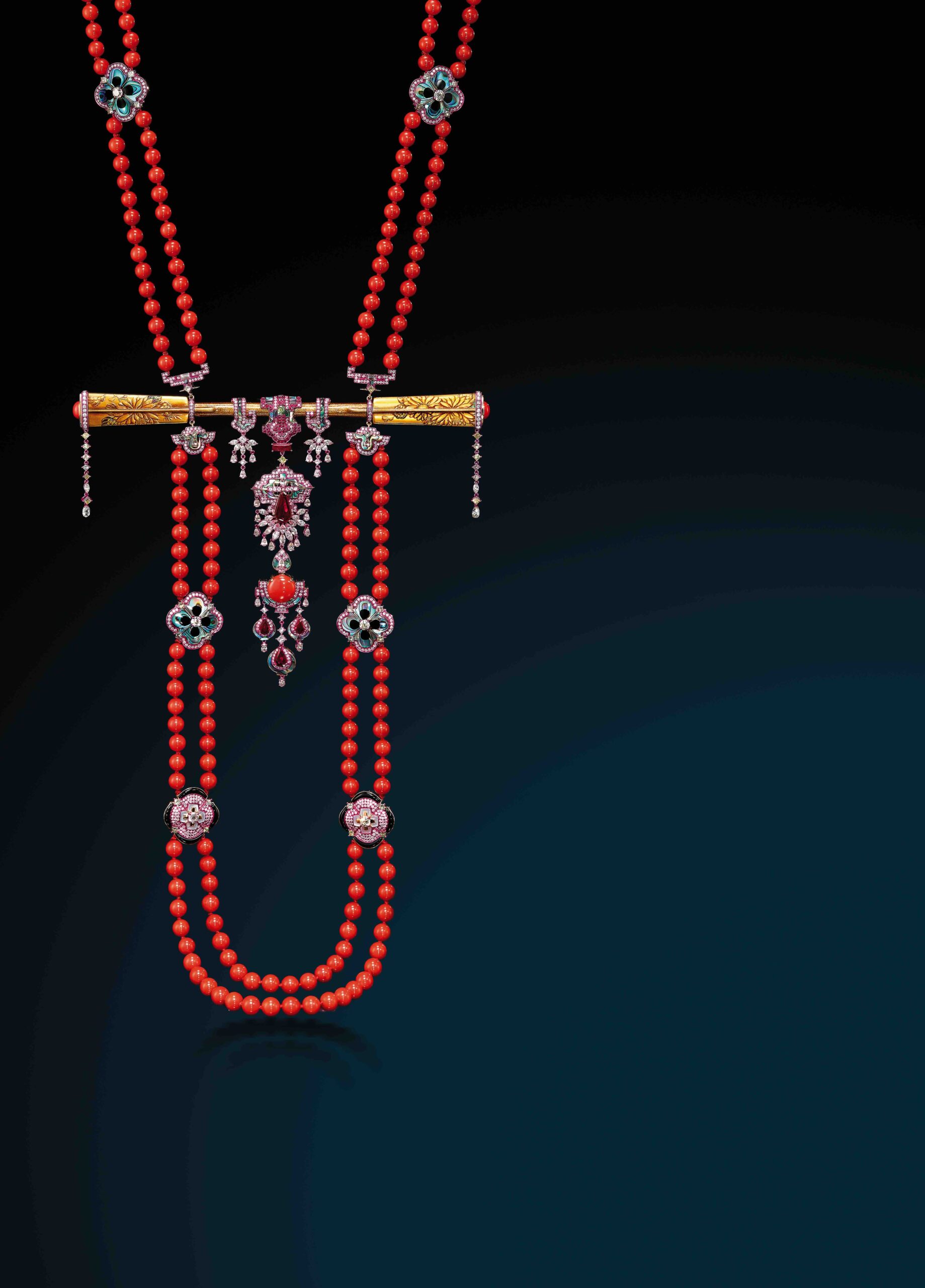
The Akai Amoronagu Necklace 18K rose gold, rubies, precious coral, antique Meiji Makie lacquer hairpin, mother-of-pearl, abalone shell, onyx, red & black enamel, fancy yellow diamonds and white diamonds The Ancient Fetus Collection by Austy Lee Private Collection
An Immersive Descent
The exhibition begins with an immersive introduction that simulates a descent from sea level to depths of up to 2,000 meters. Visitors move downward physically and conceptually, entering a dimmed environment that evokes the ocean floor where precious coral colonies grow – scenography that draws on L’ÉCOLE’s Cabinet, a curated selection of natural specimens, historic jewels, artworks, and technical objects inspired by the tradition of “cabinets of curiosity.”
Coral branches – raw and polished – are presented alongside maps showing the known location of precious coral beds. The display distinguishes precious coral from reef coral, clarifying their different habitats and ecological roles. Contemporary fishing and trade regulations, and university research are addressed, reflecting the industry’s increasing attention to traceability.
Coral: Biology and Gemology
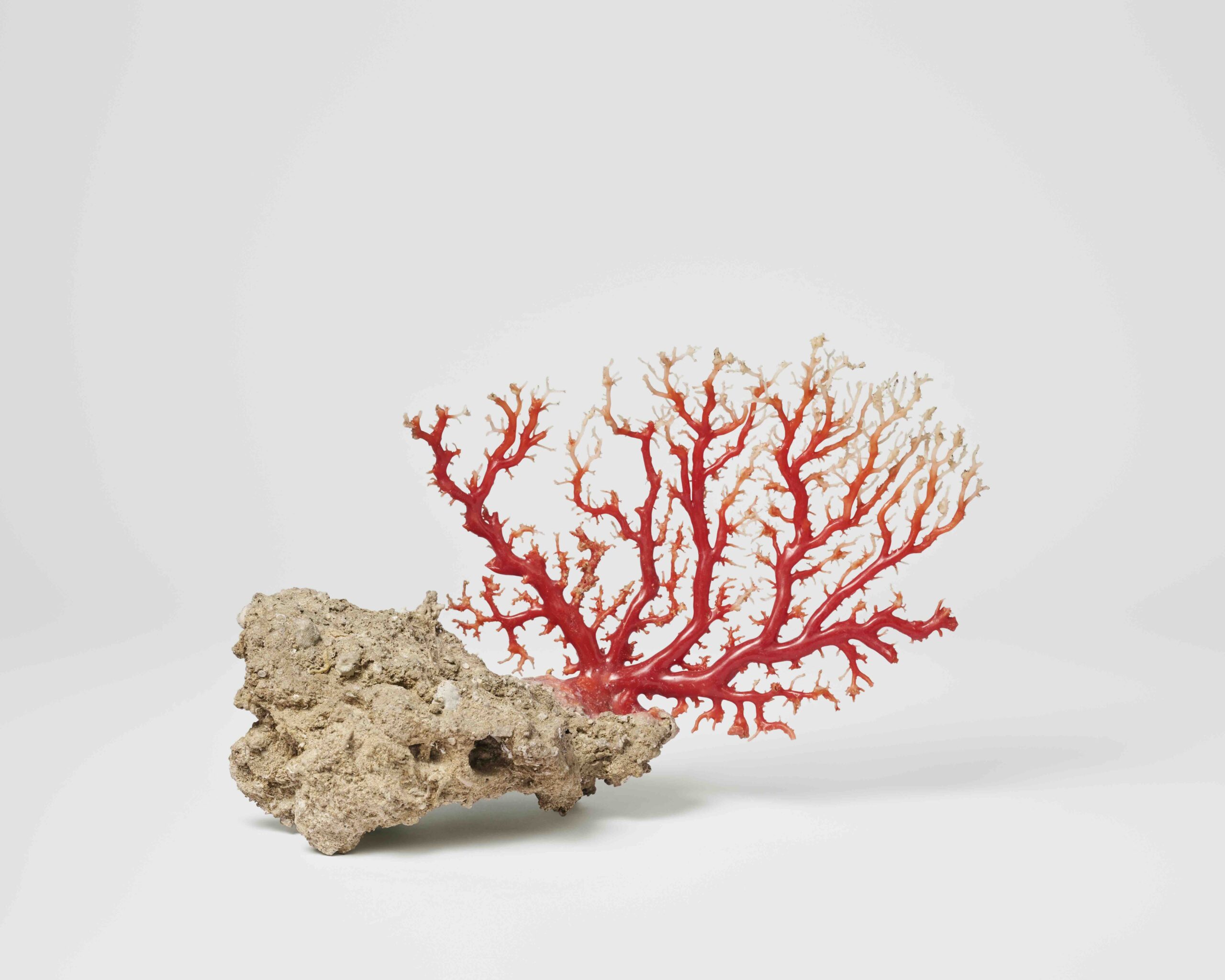 Polished precious coral branch Precious coral (Corallium japonicum), rock Chii Lih Coral Museum
The first chapter in this journey focuses on precious coral science and classification. Specimens of five precious coral species are presented, including Corallium rubrum, the most historically significant species. Visitors gain a grounded understanding of how coral forms, how it is identified in gemology, and why its biological origin distinguishes it frommineral gemstones.
Precious Coral – Savoir Faire: Polishing and Carving
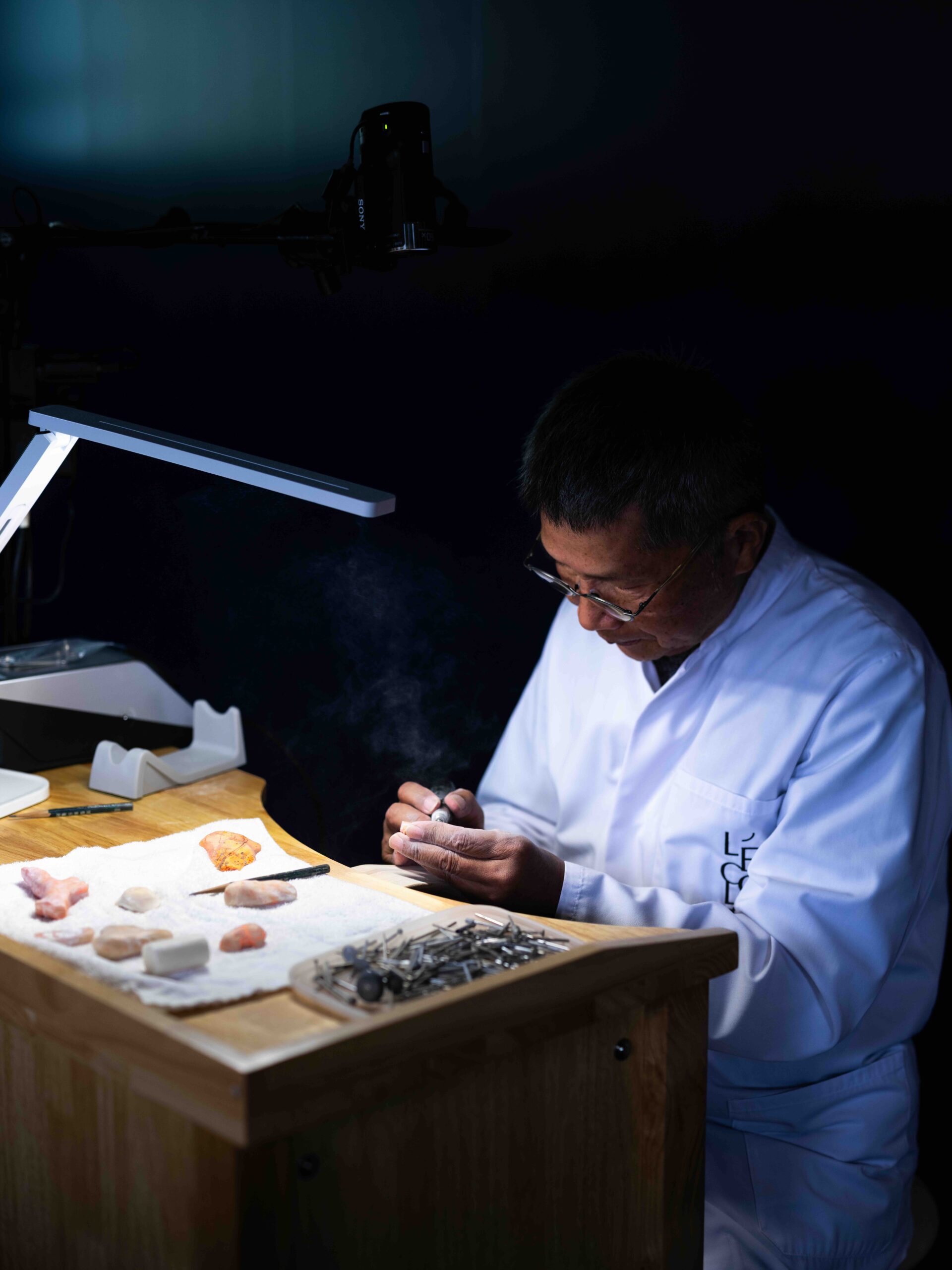
The second chapter turns to transformation. Precious coral’s journey from branch to bead, inlay, sculpture, or jewel requires patience and technical precision. This chapter bridges technical knowledge and cultural meaning. Polishing and engraving techniques transition naturally into the final section, where coral’s symbolism unfolds across centuries and geographies.
Precious Coral – Art History: Collecting Coral Jewelry
From Greco-Roman mythology in which coral was believed to have formed when Medusa’s blood touched seaweed, to European small coral amulets to ward off misfortune and protect children or to symbolize prosperity in China, coral has long been associated with protection, life force, and status. The exhibition presents five objects from five continents to illustrate coral’s global presence.
The final section traces coral’s place in 20th-century jewelry, highlighting its continued relevance to contemporary designers and high jewelry maisons. Parures and objets de vertu, including clocks and statues, show how coral moved from sacred object to collector’s treasure.

Ann Lee Exhibition Co-curator Gemologist & Lecturer, Asia Pacific L’ÉCOLE, School of Jewelry Arts
|
“Working with precious coral requires both technical sensitivity and respect for its fragility. Its softness allows for intricate carving and engraving, yet that same quality demands precision and patience from the artisan. By presenting tools, unfinished branches, and completed jewels and objects side by side, we hope visitors gain a deeper appreciation for the craftsmanship involved –and for the transformation that turns a raw branch into a work shaped by skilled hands.” |
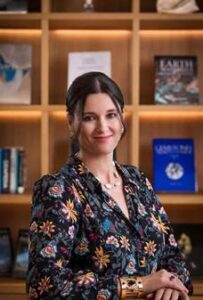
Mathilde Berger-Rondouin Exhibition Co-curator Art Historian and Lecturer, Asia Pacific L’ÉCOLE, School of Jewelry Arts |
“What fascinates me about precious coral is the way it carries meaning across cultures without losing its identity. From Mediterranean amulets to Qing court ornaments and Himalayan ceremonial adornments, precious coral has signified protection, vitality, rank, and prosperity. It travels remarkably well –geographically and symbolically. This exhibition shows how a material shaped by nature becomes layered with stories, beliefs, and power as it moves through time.” |
To Go Further
Designed for a broad audience – from families and students to gemologists, jewelry professionals, and cultural enthusiasts – the exhibition balances accessibility with depth.
Interactive elements throughout the exhibition invite tactile and experiential learning. While respecting the fragility of historical works, select displays allow visitors tohandle educational materials and examine tools used in coral crafting.
An interactive space at the K11 MUSEA Atrium will further extend L’ÉCOLE’s educational mission. From July 7th to August 15th, 2026, visitors are invited to explore a thoughtful introduction to L’ÉCOLE’s world – its exhibitions, courses, books, podcast, and talks.
With their mobile phones, visitors may scan the questions at various checkpoints and find the correct answers, allowing them to redeem a dedicated gift at the school on the 5th floor. Conceived as an open and engaging environment, the space welcomes the wider community to discover the pleasure of learning about thejewelry arts beyond the walls of the school.
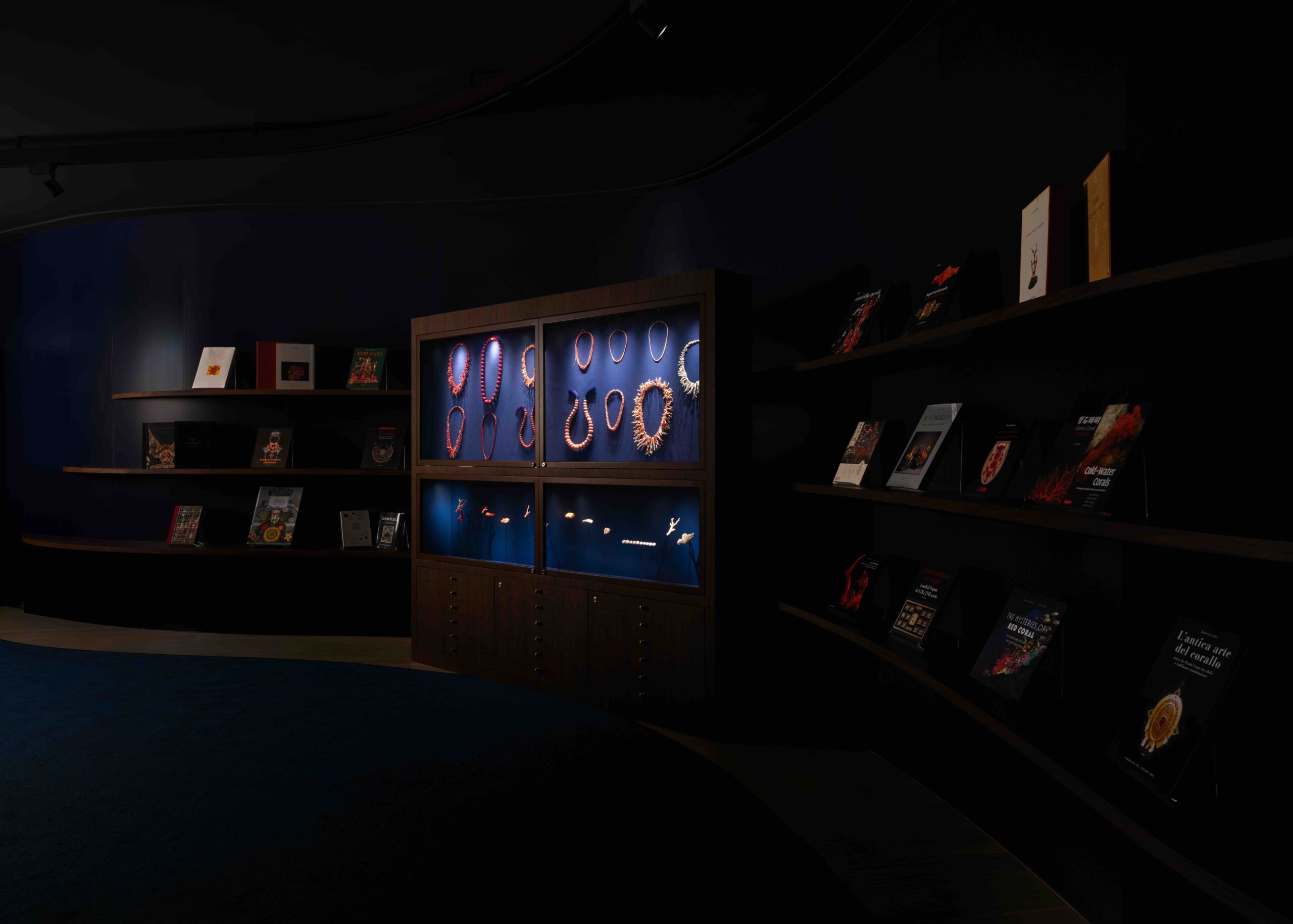
The Precious Coral, from Curiosity to Treasures exhibition places it in context – biological, historical, and human. Tracing its journey from deep ocean floors tocollectors’ cabinets, from modest protective amulets to finely worked high jewelry, it reframes coral as both intimate and far-reaching. Its branches may be small, but their history stretches across continents and generations.
About L’ÉCOLE, School of Jewelry Arts
Established in 2012 with the support of Van Cleef & Arpels, L’ÉCOLE, School of Jewelry Arts aims to introduce the public to all aspects of jewelry culture through various activities: courses, workshops, talks, exhibitions, research, books and Podcast.
Activities at L’ÉCOLE cover three main areas: the history of jewelry, the world of gemstones and savoir-faire. The courses are open to everyone, with no prerequisites: complete beginners as well as enlightened amateurs, collectors and those with a curiosity for the world of jewelry.
Students experiment with gestures, skills and tools, guided by their lecturers – art historians, gemologists and craftsmen. L’ÉCOLE now has four permanent addresses: in Paris, Hong Kong, Shanghai and Dubai.
Moreover, since its inception, L’ÉCOLE regularly travels abroad, in Europe, America, Asia and the Middle East, for talks, exhibitions or travelling course programs that can last one to three weeks. L’ÉCOLE, School of Jewelry Arts therefore contributes to the promotion and visibility of jewelry culture on an international scale.
For more information: https://www.lecolevancleefarpels.com/hk/en
Exhibition
Precious Coral, from Curiosity to Treasures
Saturday, May 23rd to Thursday, October 11th, 2026
Open everyday 10a.m. – 7p.m.
Free Admission
Registration Required
L’ÉCOLE, School of Jewelry Arts
510A, 5/F, K11 MUSEA, Hong Kong
Information and registration:
https://www.lecolevancleefarpels.com/hk/en
@LECOLEAsiaPacific #LECOLEHongKong
#PreciousCoral